
You wake up in complete darkness. The hum of the air conditioner has stopped. Your phone charger isn’t working. The silence is unsettling.
This is manageable. You don’t need to panic, and you don’t need an electrician at 2AM. What you need is a clear plan for the next few hours until you can get proper help in the morning.
This guide walks you through the immediate steps: staying safe, working out what’s wrong, protecting your home from damage, and getting through until morning. If you’ve been lying there wondering what to do first, start here.
First 60 Seconds: Stay Calm and Stay Put
Your instinct is to jump up and investigate. Don’t.
Most power outages aren’t emergencies. Nothing requires you to act in the next sixty seconds. What does require attention is not injuring yourself stumbling around in pitch darkness.
Stay exactly where you are. Take three deep breaths. Let your heart rate settle.
This minute serves a purpose. Your eyes need time to adjust. Your brain needs time to shift from sleep mode to problem-solving mode. Rushing achieves nothing except increasing your chance of walking into furniture or missing a step.
Don’t immediately check the switchboard in the dark
The switchboard isn’t going anywhere. It can wait ten minutes.
Navigating your house in complete darkness to reach the switchboard is how people end up with twisted ankles, bruised shins, or worse. You’ve got stairs, furniture, pets, kids’ toys. All of them are invisible right now.
Checking the switchboard improperly in the dark can also make things worse. If there’s a genuine electrical fault, fumbling around without being able to see what you’re doing isn’t safe.
Let your eyes adjust before moving
Sit still for one to two minutes. Your pupils will dilate naturally, and you’ll start to make out basic shapes and obstacles.
Use this time to locate your phone. It’s probably on your bedside table or charging nearby. Don’t turn the torch on yet. The bright light will reset your natural night vision and you’ll be back to square one.
Once you can see enough to move safely, then reach for the phone.
Check if your neighbours’ lights are on
Look out the window once your eyes have adjusted. Are the neighbouring houses dark or lit?
This tells you immediately whether it’s just your house or a wider network outage. If the whole street is dark, you can relax. It’s the network. Your energy provider already knows, and it’ll likely be fixed within a few hours.
If your neighbours have power, it’s your switchboard or your wiring. You’ll need to investigate further, but at least you know where the problem sits.
Is This Just You, or the Whole Street?
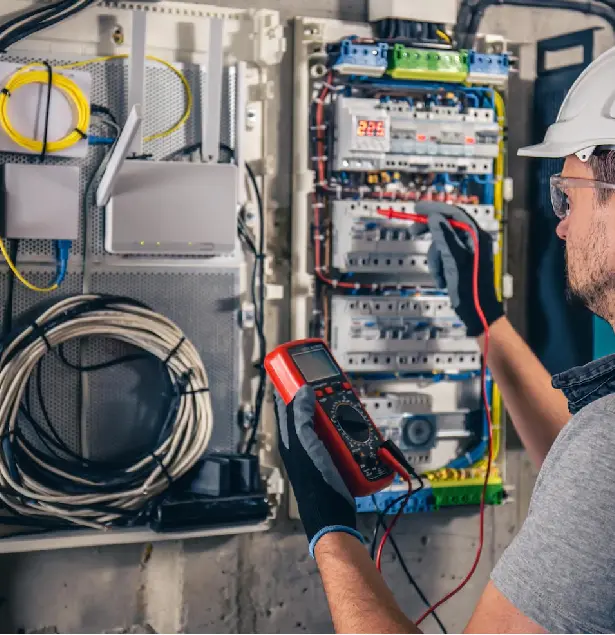
Diagnosis matters because it determines what happens next. If it’s a network outage, you wait. If it’s your switchboard, you might be able to fix it yourself, or you’ll need to call someone in the morning.
Most 2AM outages are network issues. Storms, equipment failure, scheduled maintenance that overran. These resolve themselves. You don’t need to do anything except wait.
If it’s your house specifically, you need to safely check your system before deciding whether this is something you can handle or whether you need professional help. If you’re unsure about what might be causing ongoing issues, our guide on Why Are My Lights Flickering covers common electrical warning signs.
How to tell if it’s your switchboard or a network outage
Network outage signs: multiple houses are dark, street lights are out, traffic lights aren’t working. If you check your phone and mobile data is also down, that’s another indicator of something widespread.
Your switchboard signs: only your house is dark, neighbours clearly have power, you were running a high-draw appliance just before the outage (air conditioner, heater, oven).
Tripped safety switches affect only some circuits. Your bedroom might be dark but the kitchen light still works. If the main switch has tripped, everything goes dark.
When to call your energy provider (and when not to)
If it’s a network outage, your provider already knows. Calling at 2AM won’t speed things up.
Check their outage map or app first. Most energy providers have real-time outage information online. This tells you whether it’s logged, how many properties are affected, and the estimated restoration time.
Only call if you see downed power lines, smell burning, or suspect immediate danger. Those situations need reporting. A standard network outage doesn’t.
What to check at your switchboard safely
Now you can use your phone torch. Walk carefully to the switchboard, watching for obstacles.
Look for tripped safety switches. They’ll be in the middle position, not fully up or down. Check the main switch position as well.
Try resetting a tripped safety switch once. Push it fully down, then back up. If it trips again immediately, stop. Don’t touch it again. That’s a sign of a genuine fault that needs professional attention.
Don’t force switches. Don’t touch anything if you smell burning. Don’t investigate if anything looks or feels wet.
What to Do Right Now to Protect Your Home

Photo by Markus Spiske on Pexels
Even if power returns in an hour, you need to protect your appliances and food from damage. These steps take five minutes but could save you hundreds of dollars.
This is about taking control rather than just waiting helplessly. Whether it’s a network outage or your switchboard, these actions are the same.
Turn off appliances that were running (especially heating and cooling)
When power returns, every appliance trying to start simultaneously can trip your safety switches or cause voltage surges.
Turn off or unplug air conditioners, heaters, washing machines, dishwashers, and ovens. High-draw appliances like heating and cooling systems are the biggest culprits for post-outage problems.
Leave one light switch on. You’ll know immediately when power returns, even if you’ve gone back to sleep.
Open your fridge only if absolutely necessary
A closed fridge stays cold for four to six hours. A full freezer stays frozen for 24 to 48 hours.
At 2AM, you probably don’t need anything from the fridge urgently. Every time you open the door, you release cold air and shorten the safe window.
Wait until morning to assess food safety unless the outage extends beyond four hours.
Unplug sensitive electronics to avoid surge damage
Power restoration can cause voltage spikes. These damage computers, TVs, gaming consoles, and other expensive electronics.
Unplug them. Don’t just turn them off. Unplugging is the only guaranteed protection.
Phone chargers and small appliances are less critical, but you can unplug those too if you want complete peace of mind. Surge protectors help, but they’re not foolproof.
Getting Through the Night Without Power

Photo by Steve A Johnson on Pexels
You’ve protected your home. Now you need to stay comfortable and safe until morning.
Most outages resolve within two to four hours. You’re looking at temporary measures, not a survival situation. People manage without power regularly. You can handle a few hours.
Safe lighting options (and what not to use)
Use your phone torch, battery-powered torches, or LED camping lanterns. These are safe and effective.
Do not use candles. The fire risk isn’t worth it, especially if you might fall asleep.
Place torches upright in cups or jars to create ambient lighting rather than directional beams. This lights a room more evenly and is easier on your eyes.
If you don’t have a proper torch, add one to your emergency kit. The CFA recommends preparing an emergency kit before bushfire season and storing it somewhere accessible.
Keeping warm or cool without electricity
Cold: extra blankets, close doors to smaller rooms, wear layers including a beanie. Body heat is surprisingly effective in a confined space.
Heat: open windows for cross-breeze, damp cloth on your forehead, move to the coolest room (usually the bathroom). Avoid exertion.
It’s only for a few hours. Discomfort is manageable and not dangerous for most people. Extreme temperatures (under 5°C or over 35°C) are different, which brings us to the next point.
When to consider leaving for a hotel
This is a valid option if you have young children, elderly family members, or medical needs requiring power.
Consider it if the temperature is extreme and the outage is confirmed to last many hours. Otherwise, most people can safely wait until morning to reassess.
If you do leave for an extended period, turn off the main switch at your switchboard. This protects your home if power returns while you’re away.
What to Do When the Power Comes Back On

How you restore power matters. Doing it wrong can trip switches again or damage appliances.
The hard part is over. These final steps protect the work you’ve already done.
Turn appliances back on gradually, not all at once
Wait five minutes after power returns before turning anything on.
Turn on essential items first. Fridge, one light. Wait two to three minutes.
Add other appliances one at a time with gaps between each. This prevents overload that could trip the safety switch again.
If you’re concerned about the cost of getting an electrician out to check your system properly in the morning, our guide on How Much Do Electricians Charge Per Hour breaks down what to expect.
Check your fridge and freezer contents
If power was out for less than four hours and the fridge stayed closed, food is safe.
Check freezer items. If they’re still icy or cold to touch, they’re fine to refreeze.
Look for unusual smells or temperature changes. These indicate spoilage.
When in doubt, throw it out. Food poisoning isn’t worth the risk.
If you’re experiencing repeated outages or ongoing electrical issues, it might be time to book a proper inspection. Our article on How Often Do I Need To Get Electrical Safety Checks explains when professional assessment becomes necessary.
You’ve made it through. Get some sleep.